

How to Choose Your First Cricket Bat: Weight, Willow and Grip Guide
A cricket bat is the one piece of kit that gets blamed for everything. Dropped catches, late cuts, that stinging feeling in your bottom hand on a cold morning — the bat takes the blame. And often it deserves some of it. A bat that is too big or too heavy for the person holding it will teach poor habits long before anyone teaches a forward defence.
Choosing a first bat is not complicated. Three things decide almost everything: the size of the bat, how heavy it feels in the hands, and what it is made of. Get those right and you can spend the rest of your life arguing about the fourth thing, which is the brand.
Start With Size, Not With Price
Bat sizes run from Size 0 up to Size 6, then Harrow, then full size. Each step up adds roughly five centimetres of length, and every manufacturer publishes its own height chart, so check the maker's guide before you buy. As a rough starting point:
- Size 0 to 2: the smallest bats, generally for players up to around seven years old.
- Size 3 to 5: the middle of the junior range, roughly seven to eleven years old.
- Size 6 and Harrow: for taller juniors and younger teenagers. Harrow sits just under a full-size bat.
- Full size: adult length, sold in short handle and long handle. Long handle suits taller players, but only when they are actually tall enough to use it.
Charts are a guide, not a rule. Two children of the same age can be fifteen centimetres apart in height, and a bat that reaches the waist on one will drag on the ground for the other. So do the fit test. Stand the bat upright next to the player's leg, toe on the floor. The top of the handle should sit somewhere between the knee and the top of the thigh — around the hip for most comfortable fits. If the handle is above the waist, the bat is too long. If it barely reaches mid-thigh, it is too short.
Then check the toe. A player should be able to stand the bat upright beside them without their arm stretched out, and there should be a clear gap between the bottom of the bat and the ground when they hold it in a normal stance. A bat that touches the floor in the stance will be scraped to pieces within a season.
Weight: Light Beats Heavy Almost Every Time
Adult bats generally sit between about 2lb 5oz and 2lb 12oz. Junior bats run from roughly 1lb 10oz up to 2lb 6oz. Those numbers matter less than how the bat picks up, because weight distribution changes everything: a 2lb 9oz bat with a light handle can feel easier to swing than a 2lb 6oz bat with a heavy blade.
Here is the test. Hold the bat by the very top of the handle, thumb and forefinger only, arm straight out to the side at shoulder height. Hold it there for ten seconds. If the nose of the bat dips, or your arm starts to wobble, it is too heavy for that player. This is the single best check in any shop, and it takes under a minute.
Second test: get into a batting stance and play five or six shadow shots, then hold the pose at the end of a drive. If the bat pulls the hands down, it is too heavy. A young player swinging a slightly light bat will hit the ball better, learn faster and stay injury-free. There is no prize for the heaviest bat in the bag.
Willow: English or Kashmir?
Nearly all bats are made from willow, but there are two distinct types. English willow is grown in the UK and is softer, lighter for its size, and offers a livelier response off the middle. It also costs considerably more and needs care — knocking in, occasional oiling and a scuff sheet. Kashmir willow is grown in India, is harder and denser, and tends to be heavier for the same size. It is tougher, cheaper, and perfectly good for a first bat, a growing child, or anyone playing mostly on rough ground with cheaper balls.
If you buy English willow, you will see it graded, usually Grade 1 down to Grade 4 or 5. Grading is largely about appearance: grain straightness, blemishes and colour. It is not a reliable measure of how the bat performs. A Grade 3 bat with a straight grain can middle the ball beautifully and will often cost much less than a flawless Grade 1.
For a first bat, Kashmir willow is a sensible, honest choice. Spend the difference on coaching, or on the bigger bat you will need in two years.
Handle, Grip and Sweet Spot
The handle
Handles are made of cane, usually with rubber strips layered inside to absorb shock. More cane and more rubber give a softer feel and less sting, but add weight. Junior bats usually come with thinner handles, which is exactly what small hands need.
The grip
Grips are cheap and replaceable, which makes them the easiest thing to fix. Thin grips suit players with small hands; a grip that is too thick stops the hands closing properly around the handle. If a junior bat arrives with a chunky grip, ask for it to be replaced with a thinner one. If several grips are stacked on a bat, that is often hiding a handle that is too thin.
The sweet spot
Every bat has a middle, and it sits in a different place depending on the shape. A low sweet spot suits front-foot players on slower, lower pitches. A mid sweet spot is the safe, forgiving choice for a beginner. A high sweet spot suits back-foot players on hard, bouncy surfaces. If you play on a dry club square, mid is the place to start.
Match the Bat to How You Actually Bat
A front-foot player who drives through the covers wants a bat with a low or mid middle and can cope with a slightly heavier pick-up. A player who cuts and pulls off the back foot does better with a high middle and a light feel. Someone just learning the game should ignore all of this and choose a mid middle, a light pick-up and a size that fits properly. Technique first, equipment quirks later.
What to Check Before You Pay
- Length and weight stamps: confirm what the label says, then trust your hands over the numbers.
- The toe: no cracks or soft spots; look for a rubber toe guard or a well-sealed edge.
- The handle: twist it gently. Any squeak or movement means the cane is loose.
- Edges and spine: they should be even and firm, not dented or swollen.
- The face: a scuff sheet and a cover are worth having from day one.
- Knocking in: if the bat is new and un-prepared, plan for the work — see below.
- Second-hand bats: be wary of a dark, soggy toe from over-oiling, a cracked splice, or a fresh grip that may be covering a broken handle.
Bringing It Home
A new bat needs knocking in before it faces a hard ball. Work a mallet over the face and edges gradually, over several sessions, avoiding the toe, until the surface stops denting. A scuff sheet protects the face afterwards, and English willow benefits from a light oil at the start of the season rather than a soaking. Store the bat in its cover, away from radiators and car boots in summer.
Recheck the fit every season. Juniors grow, and a bat that fitted in April can be dragging on the ground by September. If you are unsure between two sizes in the shop, take the smaller one and ask a coach or the shop staff to watch the player hold it — then buy the bat they can swing easily today, not the one they might grow into next year.
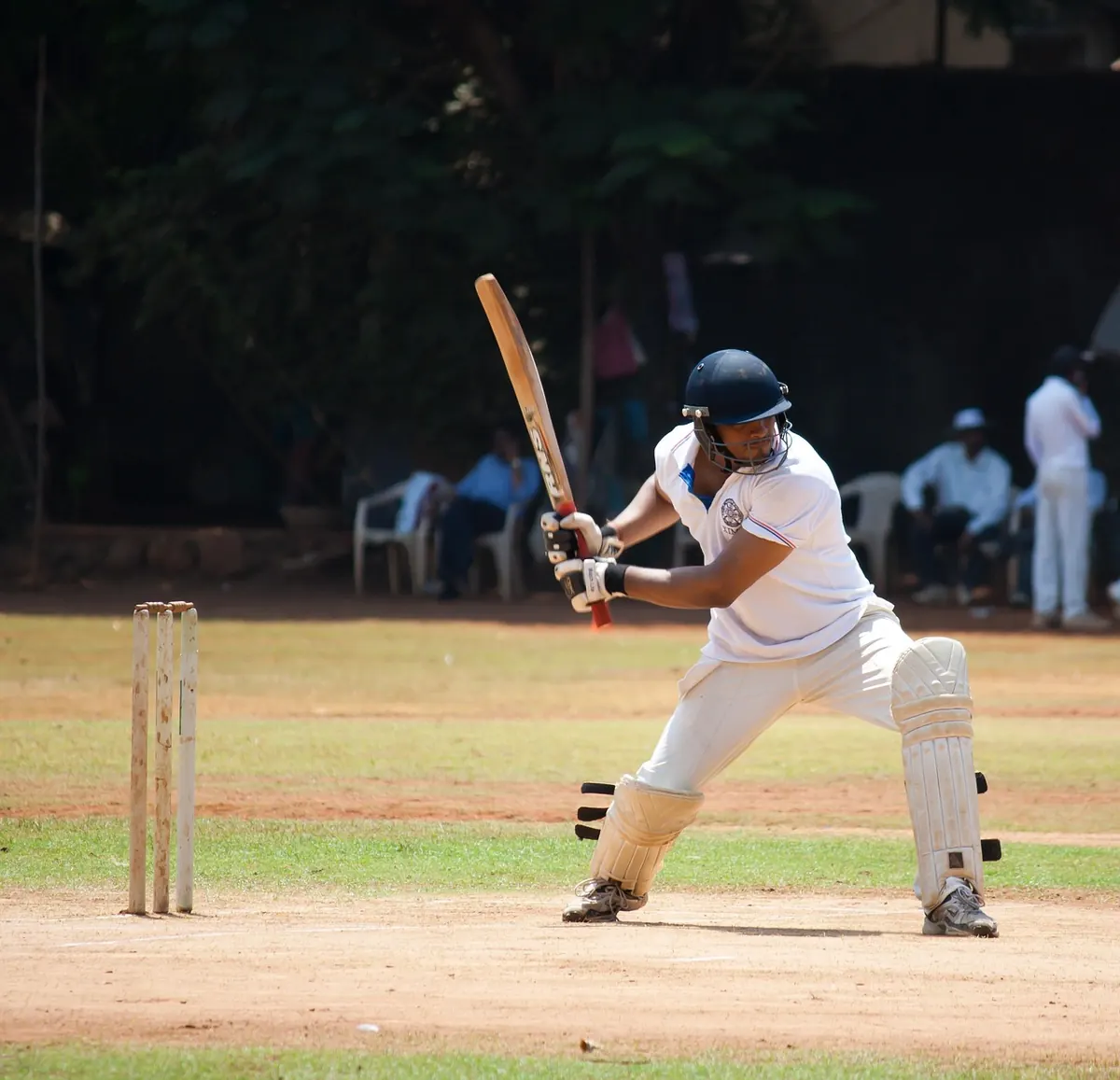
Photo: Anil Sharma / Pexels