
Batting Stance Basics: A Beginner's Guide to Balance, Grip and Backlift
Most beginner batters spend their first net session thinking about shots. The trouble is that a cover drive, a pull and a forward defensive all begin in the same place: the way you stand at the crease before the bowler runs in. Get the set-up right and every shot has something solid to build on. Get it wrong and you will spend the season fighting your own feet.
The Grip: Two Hands, One Job
For a right-hander, the left hand sits at the top of the handle and the right hand goes just below it, the little finger of the bottom hand close to the top hand. Both hands make a V between thumb and forefinger, and those Vs should line up down the front of the bat, pointing towards the splice.
Hold the bat like a handshake with the top hand and like a hammer with the bottom. Not gentle, not strangled. Around four out of ten in terms of pressure, with the squeeze coming from the fingers rather than the palms. If your knuckles are white before the bowler has started his run-up, you are gripping too hard, and tired forearms are what follow.
The top hand controls the bat's direction; the bottom hand adds power. Beginners often get this backwards and try to hit with the bottom hand alone, which drags the bat across the line of the ball.
Feet and Body: Build a Stable Base
Set your feet roughly shoulder-width apart, maybe a fraction wider. Facing a right-arm bowler over the wicket, a right-hander stands side-on: left shoulder leading and pointing roughly at the bowler, chest angled towards cover.
The front foot goes slightly forward and points towards the bowler or just outside off stump. The back foot sits parallel to the popping crease and stays behind it until the ball is released — step out early and a sharp wicketkeeper will do the rest. Knees soft, hips loose, never locked. A stance that feels like standing to attention is too stiff; one that feels like sitting on a stool is too low.
Weight and Head Position
Balance starts in the feet. Weight on the balls of the feet, heels just touching the ground, so you can push off in either direction. Rock back onto your heels and you will fall towards the off side and play around the ball.
Head still, eyes level, nose pointing roughly at the bowler's release point. Keep the head from toppling towards the off side, because where the head goes, the weight follows, and the bat follows the weight. A quick check in front of a mirror: your nose, the middle of your chest and your front knee should sit roughly in line.
The Backlift: Short, Straight and On Time
The bat rests behind the back foot, tapping the ground near the crease. As the bowler releases, the hands lift the bat up and back, roughly towards the wicketkeeper's gloves. Not towards gully or point — a backlift that wanders sideways has to be dragged back into line before it can come down straight.
For a beginner, keep it low: hands somewhere around hip or waist height. A shorter backlift gives you more time and fewer moving parts. The bat should then come down close to the body and along the line of the ball, which is the whole point. Think of lifting the bat rather than swinging it.
Adding a Simple Trigger Movement
A trigger movement is the small shuffle batters make just before the ball arrives. It gets the feet moving and stops you from being flat-footed. Most experienced players have one, and most beginners should pick the simplest version available.
- The small press forward: the front foot moves a few inches towards the bowler as the arm comes over, and you play from there.
- Back and across: the back foot shifts slightly towards off stump and the front foot follows. Popular with players who like to play straight.
- Bat tap and heel lift: tap the bat behind the back foot and lift the back heel a fraction. Low effort, easy to repeat.
- Nothing at all: some players stay still and simply react. Perfectly legitimate, as long as you are balanced and ready.
Whichever you choose, do the same thing every ball. A trigger movement that changes with your mood is worse than no trigger at all. Finish the movement before the ball is released and be balanced on both feet when it arrives. Those feet should never cross or tangle.
Faults That Creep In
Standing too upright. Straight legs and a stiff back make it hard to get forward or back. Bend the knees a touch and relax the shoulders.
Feet too wide or too narrow. Too wide and you cannot move; too narrow and you fall over. Shoulder-width is the reliable default.
The death grip. Squeezing the handle slows the bat down. Loosen it and let the bat swing.
A backlift behind the armpit. If the bat lifts towards point, the downswing comes across the ball. Lift back, then come down straight.
Moving too early. Jumping into the trigger before the bowler has released leaves you standing still when it actually matters.
Practising the Set-Up
Ten minutes in front of a mirror does more for a beginner than an extra half hour of throwdowns. Set up, hold the position for five seconds, check grip, feet, head and backlift, then reset. Twenty reps. Then add the trigger: set, trigger, hold, reset, without a ball, until it feels automatic.
In the nets, ask a partner to call "set" as the bowler releases, so you learn to arrive in position at the right moment. Once the stance is repeatable, the shots start to look after themselves. If niggling back or knee pain shows up and does not settle, get it checked by a physiotherapist rather than batting through it.
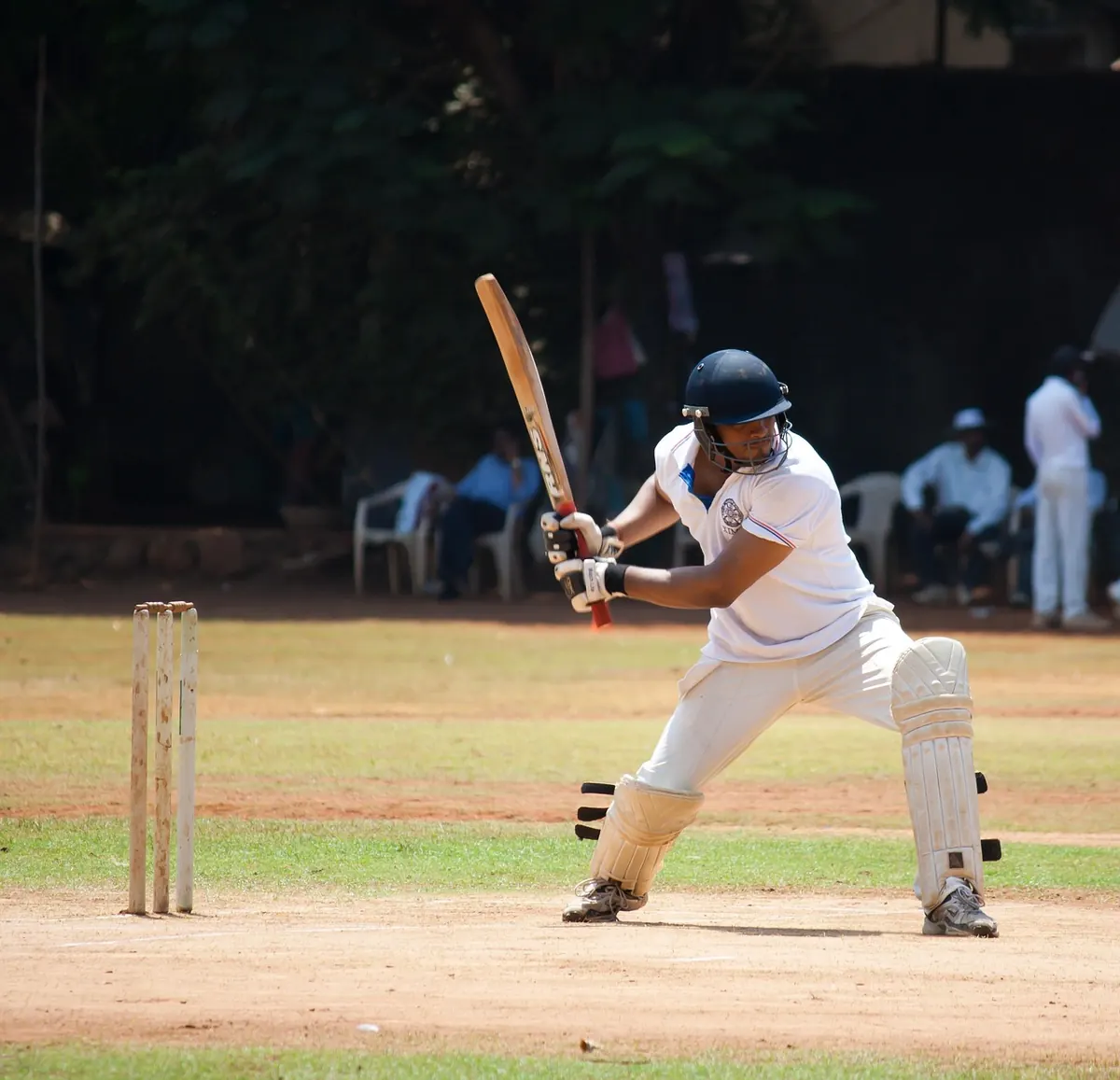
Photo: PDPics / Pixabay